

Skip Navigation
Skip to contents

Intest Res : Intestinal Research

IMPACT FACTOR

Articles

Page Path
HOME > Intest Res > Volume 15(2); 2017 > Article
Case Report Fecal microbiota transplantation for refractory Crohn's disease
Seon Ho Bak1, Hyun Ho Choi2, Jinhee Lee1, Mi Hee Kim1, Youn Hee Lee1, Jin Su Kim1, Young-Seok Cho1
Intestinal Research 2017;15(2):244-248.
DOI: https://doi.org/10.5217/ir.2017.15.2.244
Published online: April 27, 2017

1Department of Internal Medicine, Seoul St. Mary's Hospital, College of Medicine, The Catholic University of Korea, Seoul, Korea.

2Department of Internal Medicine, Uijeongbu St. Mary's Hospital, College of Medicine, The Catholic University of Korea, Uijeongbu, Korea.

Correspondence to Young-Seok Cho, Department of Internal Medicine, Seoul St. Mary's Hospital, College of Medicine, The Catholic University of Korea, 222 Banpo-daero, Seocho-gu, Seoul 06591, Korea. Tel: +82-2-2258-6021, Fax: +82-2-2258-2038, yscho@catholic.ac.kr
• Received: August 23, 2015   • Revised: December 10, 2015   • Accepted: December 21, 2015

© Copyright 2017. Korean Association for the Study of Intestinal Diseases.

This is an Open Access article distributed under the terms of the Creative Commons Attribution Non-Commercial License (http://creativecommons.org/licenses/by-nc/4.0) which permits unrestricted non-commercial use, distribution, and reproduction in any medium, provided the original work is properly cited.

prev next
  • 8,592 Views
  • 71 Download
  • 25 Web of Science
  • 26 Crossref
  • 31 Scopus
  • Approximately one-third of patients with Crohn's disease do not respond to conventional treatments, and some experience significant adverse effects, such as serious infections and lymphoma, and many patients require surgery due to complications. Increasing evidence suggests that specific changes in the composition of gut microbiota, termed as dysbiosis, are a common feature in patients with inflammatory bowel disease (IBD). Dysbiosis can lead to activation of the mucosal immune system, resulting in chronic inflammation and the development of mucosal lesions. Recently, fecal microbiota transplantation, aimed at modifying the composition of gut microbiota to overcome dysbiosis, has become a potential alternative therapeutic option for IBD. Herein, we present a patient with Crohn's colitis in whom biologic therapy failed previously, but clinical remission and endoscopic improvement was achieved after a single fecal microbiota transplantation infusion.
Crohn's disease (CD) is a chronic relapsing intestinal inflammatory disorder. It is characterized by progressive transmural inflammation of the gastrointestinal tract, which often leads to structuring or penetrating complications requiring surgical resection.1 Although the etiology of the disease remains unclear, CD involves interactions among genetic susceptibility, environmental factors (antigens derived from commensal bacteria), intestinal microbiota, and the immune system.2 Over the past decades, the incidence and prevalence of CD have gradually increased in Asian countries, including Korea.1 Conventional treatment for CD is based on the administration of aminosalicylates, corticosteroids, and immunosuppressants prior to escalation to biological therapies, in particular those using tumor necrosis factor-α antibodies.3 However, approximately one-third of patients do not respond to these treatments, some experience significant adverse effects, such as serious infections and lymphoma, and many patients require surgery.4
Increasing evidence suggests that specific changes in the composition of gut microbiota, termed dysbiosis, are a common feature in patients with IBD, including UC and CD.2 Dysbiosis can lead to activation of the mucosal immune system, resulting in chronic inflammation and the development of mucosal lesions. Recently, fecal microbiota transplantation (FMT), aimed at modifying the composition of gut microbiota to overcome dysbiosis, has become a potential alternative therapeutic option for IBD.56 Herein, we present a patient with CD in whom biological therapy failed previously, but clinical remission and endoscopic improvement was achieved after a single FMT infusion.
A 16-year-old female patient was admitted to Uijeongbu St. Mary's Hospital for the management of refractory colonic CD (A1L2B1 Montreal classification for Crohn's disease 2005). CD was diagnosed 1 year prior, according to standard endoscopic and histologic criteria (Fig. 1). CD was remitted with prednisone, and maintenance therapy with mesalazine and 6-mercaptoprine was administered. Four months prior to hospital admission, she was treated with infliximab (5 mg/kg) because of several flares, and she responded well; however, colitis aggravated 1 month before admission. On admission, the patient's body temperature was 37.1℃, and she had poor general condition. Laboratory examination showed the following: leukocyte count, 8,260/mm3 with 51.7% neutrophils; hemoglobin, 8.1 g/dL; ESR, 36 mm/h; CRP level, 6.17 mg/dL; and serum albumin level, 3.0 g/dL. A stool specimen contained white blood cells, and a test for Clostridium difficile toxin was negative. Immunohistochemical staining for cytomegalovirus was negative. Even after the infliximab dose was increased to 10 mg/kg, repeat colonoscopy showed active colitis (Fig. 2), and the patient became steroid dependent.
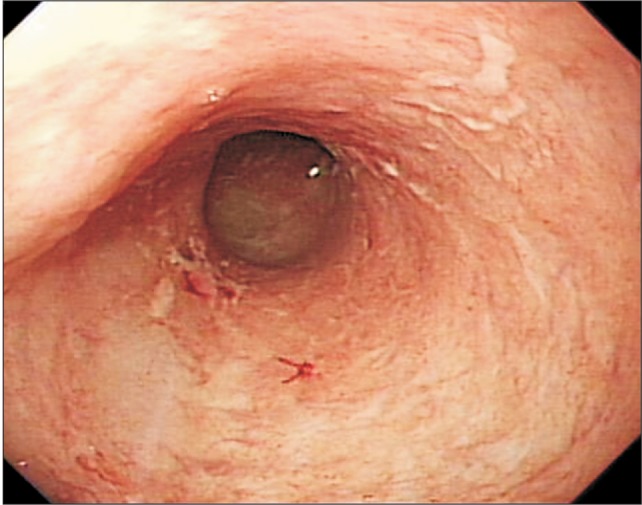
Her CDAI score was 394; thus, treatment with FMT was discussed with the patient and her parents, and they agreed to treatment. The FMT procedure was performed on day 12 after hospital admission. The FMT stool source, a family donor, received both blood and stool tests, and HBsAg, anti-HCV, Veneral Disease Research Laboratory test, C. difficile toxin, and human immunodeficiency virus were not detected. The donor had no history of antibiotic use within the past year or any history of chemotherapy. Sixty grams of stool was mixed in 250 mL of normal saline and homogenized using a mechanical blender. The suspension was filtered through gauze to remove larger particulate matters. FMT was performed using gastroduodenoscopy; the endoscope was inserted into the second portion of the duodenum, and the prepared fecal suspension was transferred to the patient's bowels through the biopsy channel of the endoscope. The procedure time was approximately 5 minutes. One day after FMT, the patient developed abdominal pain and a transient fever; however, these symptoms disappeared after conservative care. One week after FMT, the patient felt well and had 1 to 2 formed bowel movements per day with no abdominal pain. The CDAI was reduced to 132, and the patient was discharged. Although clinical remission was achieved, the patient wished to receive maintenance treatment. After FMT, mesalazine (3.0 g/day) and azathioprine (50 mg/day) was administered for maintenance therapy. In addition, 2 months after FMT, she was administered infliximab (5 mg/kg) intravenously, to which she responded well, and treatment with infliximab was continued every 2 months. A follow-up colonoscopy 10 months after FMT showed improvement in the mucosal lesions (Fig. 3). Clinical remission was sustained for more than 12 months, and the follow-up is ongoing (Fig. 4).
FMT, also referred to as stool/fecal transplantation or fecal bacteriotherapy, is the infusion or engraftment of fecal liquid filtrate from a healthy donor into the gut of a recipient to cure a specific disease.6 The concept of FMT for treatment of human intestinal diseases was described in China during 4th century, and human fecal suspension by mouth was used to treat patients who had food poisoning or severe diarrhea.7 Although it was first reported in 1958,8 it has only recently become popular due to its success in treating refractory and recurrent C. difficile infections (CDI). Recent studies have shown that FMT is an effective treatment in recurrent CDI, with a >90% success rate, and it can be considered as an antibiotic replacement for recurrent and refractory CDI that has relapsed more than three times.9
Although no definitive pathogen has been detected as the etiologic factor of IBD, many studies have investigated the disturbance of intestinal microbiota as a contributing factor to IBD pathogenesis.4 Consistent alterations in intestinal microbiota in IBD are characterized by decreased diversity at the species level, with notable decreases in the Bacteroides phylum and Lachnospiraceae group within the Firmicutes phylum and increases in Proteobacteria and Actinobacteria.6 In addition, a decrease in a butyrate-producing bacterium, which is important in intestinal health, has been observed in patients with IBD.10 However, it is still unclear whether dysbiosis itself causes IBD or if it represents an epiphenomenon due to microbial alterations as a consequence of the disease.4
The application of FMT for IBD was first published in 1989 as a case report, in which the author himself had confirmed UC for 7 years that was refractory to both sulfasalazine and steroids. Six months after transplantation of a healthy donor stool by retention enema, he remained symptom-free, and active inflammation was not detected during a follow-up biopsy sampling of the colon.11 Initial case studies of FMT enemas in patients with IBD reported that many of the patients achieved clinical remission and maintained long-term remission, and a small number of these cases also reported endoscopic and histological remission.12 However, subsequent small case series of FMT in children and adults with UC, CD, or pouchitis showed mixed results.6 Despite the demonstrated safety and efficacy of FMT for IBD in these case studies, the available evidence is scarce and insufficient as these studies were underpowered and open-labeled, and a lack of uniformity exists among FMT protocols and defined outcomes.6 Moreover, the patient populations were heterogeneous in disease type and severity, phenotype, and concomitant medications.
A recent systematic review and meta-analysis of 18 studies (nine cohort studies, eight case studies, and one randomized controlled trial) on FMT that included 122 patients with IBD (79 UC, 39 CD, and four unclassified) demonstrated a clinical remission rate of 45%.5 However, the pooled estimate for achieving short-term clinical remission after FMT was 36.2%, after excluding case studies to minimize publication bias. Subgroup analyses showed a pooled estimate of clinical remission of 22% (95% CI, 10.4–40.8) for UC and 60.5% (95% CI, 28.4–85.6) for CD. In addition, the pooled estimate for clinical remission was highest (64.1%) in young patients (aged, 7–20 years). However, the high pooled estimates for clinical remission in patients with CD or in young patients were significantly heterogeneous, which considerably limits the applicability of these conclusions. Cui et al.13 recently published a pilot study in which thirty patients with refractory CD were treated with a single FMT through the mid-gut. The rates of clinical improvement and remission based on clinical activity during the first month after FMT were 86.7% (26/30) and 76.7% (23/30), respectively. In addition, the body weights of the patients increased.
Recently, the first two randomized placebo-controlled trials evaluating the efficacy of FMT for UC were reported. In one study, 75 patients with mild-to-moderate UC were randomized to weekly FMT or placebo (water) via retention enema for 6 weeks, and the patients who received FMT had a significantly greater remission rate than that of those receiving the placebo (24% vs. 5%).14 In addition, a microbiomic analysis showed that patients who received FMT had greater microbial diversity than those who received the placebo. The other study enrolled 50 patients with mild-to-moderately active UC and randomized them to either donor stool or autologous FMT delivered via a nasoduodenal tube at baseline and again 3 weeks later.15 Only 37 patients completed the assessment for primary endpoint-clinical remission combined with a ≥1-point decrease in the Mayo endoscopic score at week 12. There were no differences in clinical or endoscopic remission between the two groups. However, patients who responded favorably showed a microbiota profile similar to that of their respective donors, whereas nonresponders did not show the same trend. Both studies were discontinued based on their respective data and safety monitoring boards due to futility in reaching their primary efficacy points.
Although several cases of IBD treated by FMT have been reported worldwide, there are currently no such cases in Korea. To our knowledge, the current article is the first report of such a case in Korea. FMT via the lower gastrointestinal route is preferred, but colonoscopy may be potentially dangerous in a patient with severe colitis.4 Therefore, our patient was administered fecal suspension via the upper gastrointestinal route. Although fecal microbial analysis was not performed before or after FMT in our patient, it is an interesting direction for future research. Taken together, FMT is not as effective for IBD treatment as it is for CDI, suggesting that IBD is a more complicated and heterogeneous disease with complex interactions among genetic, environmental, immunologic, and gut microbial factors.
Although previous studies reported that patients with IBD undergoing FMT need to receive antibiotics, further study is required to elucidate whether antibiotic treatment before FMT is necessary.4 Our patient was not administered antibiotics as a pretreatment. Overall, FMT is considered relatively tolerable and safe in the short term. Commonly reported immediate adverse events include abdominal discomfort, bloating, flatulence, diarrhea, constipation, vomiting, and transient fever.6 Most of these symptoms are self-limiting and disappear within 2 days after the FMT procedure.4 However, very little information is available regarding the long-term immunologic effects of FMT, including the onset of latent infections. In addition, diseases or conditions related to changes in gut microbiota may occur, including obesity, diabetes, atherosclerosis, IBD, colon cancer, nonalcoholic fatty liver disease, IBS, asthma, and autism.6 Long-term follow-up data for FMT should be investigated further.
In conclusion, this case report suggests that FMT through the mid-gut may be an optimal treatment for refractory CD unresponsive to current conventional therapy, such as anti-inflammatory agents, steroids, immunosuppressives, and biological therapies. Further prospective randomized studies are necessary to fully assess the safety and efficacy of FMT in patients with IBD.

Financial support: None.

Conflict of interest: None.

  • 1. Lee KM, Lee JM. Crohn's disease in Korea: past, present, and future. Korean J Intern Med 2014;29:558–570.PMID: 25228829.ArticlePubMedPMC
  • 2. Manichanh C, Borruel N, Casellas F, Guarner F. The gut microbiota in IBD. Nat Rev Gastroenterol Hepatol 2012;9:599–608.PMID: 22907164.ArticlePubMedPDF
  • 3. Kim NH, Jung YS, Moon CM, et al. Long-term clinical outcomes of Korean patient with Crohn's disease following early use of infliximab. Intest Res 2014;12:281–286.PMID: 25374493.ArticlePubMedPMC
  • 4. Wang ZK, Yang YS, Chen Y, Yuan J, Sun G, Peng LH. Intestinal microbiota pathogenesis and fecal microbiota transplantation for inflammatory bowel disease. World J Gastroenterol 2014;20:14805–14820.PMID: 25356041.ArticlePubMedPMC
  • 5. Colman RJ, Rubin DT. Fecal microbiota transplantation as therapy for inflammatory bowel disease: a systematic review and meta-analysis. J Crohns Colitis 2014;8:1569–1581.PMID: 25223604.ArticlePubMedPMC
  • 6. Kelly CR, Kahn S, Kashyap P, et al. Update on fecal microbiota transplantation 2015: indications, methodologies, mechanisms, and outlook. Gastroenterology 2015;149:223–237.PMID: 25982290.ArticlePubMedPMC
  • 7. Zhang F, Luo W, Shi Y, Fan Z, Ji G. Should we standardize the 1,700-year-old fecal microbiota transplantation? Am J Gastroenterol 2012;107:1755PMID: 23160295.ArticlePubMedPDF
  • 8. Eiseman B, Silen W, Bascom GS, Kauvar AJ. Fecal enema as an adjunct in the treatment of pseudomembranous enterocolitis. Surgery 1958;44:854–859.PMID: 13592638.PubMed
  • 9. Drekonja D, Reich J, Gezahegn S, et al. Fecal microbiota transplantation for Clostridium difficile infection: a systematic review. Ann Intern Med 2015;162:630–638.PMID: 25938992.ArticlePubMed
  • 10. Cammarota G, Ianiro G, Cianci R, Bibbò S, Gasbarrini A, Currò D. The involvement of gut microbiota in inflammatory bowel disease pathogenesis: potential for therapy. Pharmacol Ther 2015;149:191–212.PMID: 25561343.ArticlePubMed
  • 11. Bennet JD, Brinkman M. Treatment of ulcerative colitis by implantation of normal colonic flora. Lancet 1989;1:164.Article
  • 12. Brandt LJ, Aroniadis OC. An overview of fecal microbiota transplantation: techniques, indications, and outcomes. Gastrointest Endosc 2013;78:240–249.PMID: 23642791.ArticlePubMed
  • 13. Cui B, Feng Q, Wang H, et al. Fecal microbiota transplantation through mid-gut for refractory Crohn's disease: safety, feasibility, and efficacy trial results. J Gastroenterol Hepatol 2015;30:51–58.PMID: 25168749.ArticlePubMed
  • 14. Moayyedi P, Surette MG, Kim PT, et al. Fecal microbiota transplantation induces remission in patients with active ulcerative colitis in a randomized controlled trial. Gastroenterology 2015;149:102–109.e6.PMID: 25857665.ArticlePubMed
  • 15. Rossen NG, Fuentes S, van der Spek MJ, et al. findings from a randomized controlled trial of fecal transplantation for patients with ulcerative colitis. Gastroenterology 2015;149:110–118.e4.PMID: 25836986.ArticlePubMed
Fig. 1

Initial colonoscopic finding. Colonoscopy at the time of diagnosis reveals deep longitudinal ulcerations in the descending colon.

ir-15-244-g001.jpg
Fig. 2

Repeat colonoscopic finding. Colonoscopy shows active colitis in the sigmoid colon even after biological therapy was administered.

ir-15-244-g002.jpg
Fig. 3

Colonoscopic finding after fecal microbiota transplantation (FMT). Follow-up colonoscopy 10 months after FMT shows improvement in mucosal lesions.

ir-15-244-g003.jpg
Fig. 4

Clinical course of CRP and CDAI during medical therapy.

ir-15-244-g004.jpg

Figure & Data

REFERENCES

    Citations

    Citations to this article as recorded by  
    • Role and mechanism of gut microbiota-host interactions in the pathogenesis of Crohn’s disease
      Yao Xu, Runxiang Xie, Yuqing Weng, Yewei Fang, Shuan Tao, He Zhang, Huimin Chen, Axiang Han, Qi Jiang, Wei Liang
      International Journal of Colorectal Disease.2025;[Epub]     CrossRef
    • Epigenetics and the role of nutraceuticals in health and disease
      Amr El-Sayed, Lotfi Aleya, Mohamed Kamel
      Environmental Science and Pollution Research.2023; 30(11): 28480.     CrossRef
    • Crohn’s disease: Etiology, pathogenesis and treatment strategies
      Izel Aycan BASOGLU, Berna KARAKOYUN
      Marmara Medical Journal.2023; 36(2): 249.     CrossRef
    • Alteration of microbiota antibody‐mediated immune selection contributes to dysbiosis in inflammatory bowel diseases
      Eva Michaud, Louis Waeckel, Rémi Gayet, Roman Goguyer‐Deschaumes, Blandine Chanut, Fabienne Jospin, Katell Bathany, Magali Monnoye, Coraline Genet, Amelie Prier, Caroline Tokarski, Philippe Gérard, Xavier Roblin, Nicolas Rochereau, Stéphane Paul
      EMBO Molecular Medicine.2022;[Epub]     CrossRef
    • Gut microbiota: A new target for T2DM prevention and treatment
      Lulu Liu, Jiheng Zhang, Yi Cheng, Meng Zhu, Zhifeng Xiao, Guangcong Ruan, Yanling Wei
      Frontiers in Endocrinology.2022;[Epub]     CrossRef
    • Current Trends and Challenges of Fecal Microbiota Transplantation—An Easy Method That Works for All?
      Cátia Almeida, Rita Oliveira, Pilar Baylina, Rúben Fernandes, Fábio G. Teixeira, Pedro Barata
      Biomedicines.2022; 10(11): 2742.     CrossRef
    • Bibliometric and visual analysis of fecal microbiota transplantation research from 2012 to 2021
      Fengwei Zhang, Peilin Yang, Yilin Chen, Ruirui Wang, Baocheng Liu, Jianying Wang, Min Yuan, Lei Zhang
      Frontiers in Cellular and Infection Microbiology.2022;[Epub]     CrossRef
    • Fecal microbiota transplantation for Crohn’s disease: a systematic review and meta-analysis
      F. Cheng, Z. Huang, W. Wei, Z. Li
      Techniques in Coloproctology.2021; 25(5): 495.     CrossRef
    • Management of Clostridioides difficile infection in patients with inflammatory bowel disease
      Sahil Khanna
      Intestinal Research.2021; 19(3): 265.     CrossRef
    • Microbiota and epigenetics: promising therapeutic approaches?
      Amr El-Sayed, Lotfi Aleya, Mohamed Kamel
      Environmental Science and Pollution Research.2021; 28(36): 49343.     CrossRef
    • Improving the Gut Microbiota with Probiotics and Faecal Microbiota Transplantation
      Yogita M. Patil, Rajashree B. Patwardhan, Pragati S. Abhyankar
      Journal of Pure and Applied Microbiology.2021; 15(3): 1111.     CrossRef
    • Oral nanomedicine for modulating immunity, intestinal barrier functions, and gut microbiome
      Yonghyun Lee, Nobuhiko Kamada, James J. Moon
      Advanced Drug Delivery Reviews.2021; 179: 114021.     CrossRef
    • Alteration of Gut Microbiota in Autism Spectrum Disorder: An Overview
      Donghun Oh, Keun-Ah Cheon
      Journal of the Korean Academy of Child and Adolescent Psychiatry.2020; 31(3): 131.     CrossRef
    • Development of the Korean Form of the Premonitory Urge for Tics Scale: A Reliability and Validity Study
      Mira Kim, Sang-Keun Chung, Jong-Chul Yang, Jong-Il Park, Seok Hyun Nam, Tae Won Park
      Journal of the Korean Academy of Child and Adolescent Psychiatry.2020; 31(3): 146.     CrossRef
    • Secondary causes of inflammatory bowel diseases
      Yezaz A Ghouri, Veysel Tahan, Bo Shen
      World Journal of Gastroenterology.2020; 26(28): 3998.     CrossRef
    • Fecal microbiota transplantation in the treatment of Crohn disease
      Miranda Collins, Morgan DeWitt
      JAAPA.2020; 33(9): 34.     CrossRef
    • Inflammatory Bowel Diseases: The Role of Gut Microbiota
      Cristiana De Musis, Lucia Granata, Marcello Dallio, Agnese Miranda, Antonietta G. Gravina, Marco Romano
      Current Pharmaceutical Design.2020; 26(25): 2951.     CrossRef
    • The human-microbiome superorganism and its modulation to restore health
      E. Salvucci
      International Journal of Food Sciences and Nutrition.2019; 70(7): 781.     CrossRef
    • The microbiome, cancer, and cancer therapy
      Beth A. Helmink, M. A. Wadud Khan, Amanda Hermann, Vancheswaran Gopalakrishnan, Jennifer A. Wargo
      Nature Medicine.2019; 25(3): 377.     CrossRef
    • RecurrentClostridium difficileInfection: Risk Factors, Treatment, and Prevention
      Jung Hoon Song, You Sun Kim
      Gut and Liver.2019; 13(1): 16.     CrossRef
    • Low diversity gut microbiota dysbiosis: drivers, functional implications and recovery
      Michael Kriss, Keith Z Hazleton, Nichole M Nusbacher, Casey G Martin, Catherine A Lozupone
      Current Opinion in Microbiology.2018; 44: 34.     CrossRef
    • Microbiota transplantation: concept, methodology and strategy for its modernization
      Faming Zhang, Bota Cui, Xingxiang He, Yuqiang Nie, Kaichun Wu, Daiming Fan
      Protein & Cell.2018; 9(5): 462.     CrossRef
    • The hygiene hypothesis at a glance: Early exposures, immune mechanism and novel therapies
      Gabriel M. Alexandre-Silva, Pablo A. Brito-Souza, Ana C.S. Oliveira, Felipe A. Cerni, Umberto Zottich, Manuela B. Pucca
      Acta Tropica.2018; 188: 16.     CrossRef
    • The Safety of Fecal Microbiota Transplantation for Crohn’s Disease: Findings from A Long-Term Study
      Honggang Wang, Bota Cui, Qianqian Li, Xiao Ding, Pan Li, Ting Zhang, Xiaozhong Yang, Guozhong Ji, Faming Zhang
      Advances in Therapy.2018; 35(11): 1935.     CrossRef
    • Is there a potential role of fecal microbiota transplantation in the treatment of inflammatory bowel disease?
      Chang Soo Eun
      Intestinal Research.2017; 15(2): 145.     CrossRef
    • Diagnosis and treatment of Crohn's disease
      Hyun-Soo Kim
      Journal of the Korean Medical Association.2017; 60(6): 484.     CrossRef

    • PubReader PubReader
    • ePub LinkePub Link
    • Cite
      CITE
      export Copy Download
      Close
      Download Citation
      Download a citation file in RIS format that can be imported by all major citation management software, including EndNote, ProCite, RefWorks, and Reference Manager.

      Format:
      • RIS — For EndNote, ProCite, RefWorks, and most other reference management software
      • BibTeX — For JabRef, BibDesk, and other BibTeX-specific software
      Include:
      • Citation for the content below
      Fecal microbiota transplantation for refractory Crohn's disease
      Intest Res. 2017;15(2):244-248.   Published online April 27, 2017
      Close
    • XML DownloadXML Download
    Figure
    • 0
    • 1
    • 2
    • 3
    Related articles
    Fecal microbiota transplantation for refractory Crohn's disease
    Image Image Image Image
    Fig. 1 Initial colonoscopic finding. Colonoscopy at the time of diagnosis reveals deep longitudinal ulcerations in the descending colon.
    Fig. 2 Repeat colonoscopic finding. Colonoscopy shows active colitis in the sigmoid colon even after biological therapy was administered.
    Fig. 3 Colonoscopic finding after fecal microbiota transplantation (FMT). Follow-up colonoscopy 10 months after FMT shows improvement in mucosal lesions.
    Fig. 4 Clinical course of CRP and CDAI during medical therapy.
    Fecal microbiota transplantation for refractory Crohn's disease

    Intest Res : Intestinal Research
    Close layer
    TOP